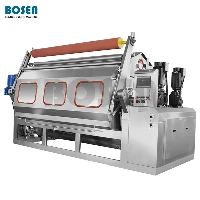
Hey there! As a supplier of Ht Airflow Dyeing Machines, I often get asked about the airflow distribution in these machines. It's a crucial aspect that can significantly impact the dyeing process, so I'm here to break it down for you.
Understanding the Basics of Airflow in Dyeing Machines
First things first, let's talk about why airflow is so important in a dyeing machine. In an Ht Airflow Dyeing Machine, the airflow plays a key role in moving the fabric through the machine and ensuring an even distribution of dye. Unlike traditional dyeing methods that rely mainly on water flow, airflow dyeing uses a combination of air and a small amount of dye liquor to transport the fabric.
The basic idea is that the high - velocity airflow creates a kind of "air cushion" around the fabric. This air cushion not only reduces the friction between the fabric and the machine parts but also helps in spreading the fabric out evenly. This is super important because it allows the dye to penetrate the fabric more uniformly, resulting in better color fastness and a more consistent dyeing result.
How Airflow is Generated in Ht Airflow Dyeing Machines
In our Ht Airflow Dyeing Machines, the airflow is generated by a powerful fan system. The fan is carefully designed to produce a stable and high - speed airflow. The air is drawn into the machine through an intake and then forced through a series of ducts and chambers.
As the air moves through these passageways, it is mixed with the dye liquor in a precise ratio. This mixture is then directed towards the fabric. The design of the ducts and chambers is critical here. They are shaped and sized in such a way that the airflow remains consistent and evenly distributed across the width of the fabric.
One of the cool things about our machines is that the fan speed can be adjusted according to the type of fabric being dyed. For example, delicate fabrics may require a lower airflow speed to prevent damage, while thicker or more tightly woven fabrics can handle a higher speed for better dye penetration.
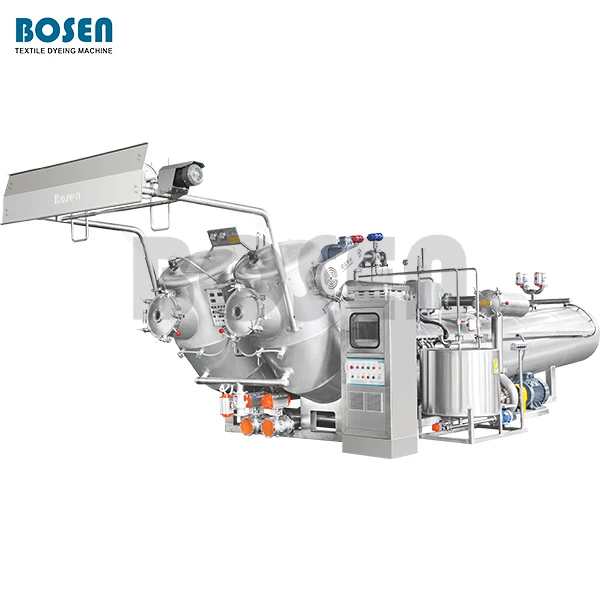

Airflow Distribution Pathways
The airflow in an Ht Airflow Dyeing Machine follows a specific path to ensure maximum efficiency. After being generated by the fan, the air - dye mixture first reaches the nozzle area. The nozzle is where the fabric enters the machine, and the high - speed airflow here helps to open up the fabric and introduce the dye.
From the nozzle, the fabric is transported along the dyeing tube. The airflow in this tube is designed to be uniform, pushing the fabric forward and allowing the dye to work its magic. Along the way, there are also special baffles and deflectors to further distribute the airflow and prevent any uneven dyeing.
Once the fabric has completed one cycle through the tube, it returns to the fabric accumulator. Here, the airflow helps to stack the fabric neatly and prepare it for the next cycle. This continuous cycling of the fabric through the machine with the help of the airflow ensures that the dyeing process is thorough and consistent.
Impact of Airflow Distribution on Dyeing Quality
The way the airflow is distributed in the machine has a direct impact on the quality of the dyeing. If the airflow is uneven, some parts of the fabric may receive more dye than others, leading to color variations. For example, if the airflow is stronger on one side of the fabric, that side may end up with a darker color.
On the other hand, a well - distributed airflow ensures that the dye is evenly applied across the entire fabric surface. This results in a more uniform color, better color depth, and higher color fastness. It also reduces the chances of fabric damage, such as creasing or stretching, which can occur if the fabric is not properly supported by the airflow.
Comparing with Other Dyeing Machines
When you compare our Ht Airflow Dyeing Machines with other types of dyeing machines, like the High Temperature High Pressure Overflow Dyeing Machine, Eco Friendly Overflow Dyeing Machine For Woven Fabric, Low Liquor Ratio Overflow Dyeing Machine For Knitted Fabric, Hthp Overflow Dyeing Machine, and Hthp Overflow Dyeing Machine For Knitted Fabric, the airflow distribution in our machines gives us a significant edge.
Traditional overflow dyeing machines rely mainly on water flow to move the fabric. This can sometimes lead to issues like fabric entanglement and uneven dyeing, especially with delicate or lightweight fabrics. In contrast, our Ht Airflow Dyeing Machines use the gentle yet powerful force of airflow to handle the fabric more delicately and ensure a more even dyeing process.
Factors Affecting Airflow Distribution
There are several factors that can affect the airflow distribution in an Ht Airflow Dyeing Machine. One of the main factors is the design of the machine itself. A well - engineered machine with properly sized ducts, nozzles, and baffles will have a more consistent airflow distribution.
The type of fabric being dyed also matters. Different fabrics have different weights, thicknesses, and porosities, which can affect how the airflow interacts with them. For example, a thick and heavy fabric may require a stronger airflow to be moved through the machine effectively, while a thin and lightweight fabric may need a more gentle airflow to prevent damage.
The condition of the machine is another important factor. Over time, dust and debris can accumulate in the ducts and nozzles, which can disrupt the airflow distribution. Regular maintenance, such as cleaning and inspection, is essential to keep the machine running smoothly and ensure optimal airflow.
How We Ensure Optimal Airflow Distribution
At our company, we take several steps to ensure that our Ht Airflow Dyeing Machines have the best possible airflow distribution. First of all, our machines are designed using the latest engineering techniques and software. We simulate the airflow patterns inside the machine to identify any potential issues and make adjustments to the design accordingly.
We also use high - quality materials for the construction of the machine parts, especially the ducts and nozzles. These parts are precisely machined to ensure smooth airflow and minimize any turbulence.
In addition, we provide comprehensive training and support to our customers. We teach them how to operate the machine properly, how to adjust the airflow settings according to the fabric type, and how to perform regular maintenance to keep the airflow distribution in top condition.
Conclusion
So, there you have it - a detailed look at the airflow distribution in Ht Airflow Dyeing Machines. As you can see, it's a complex but crucial aspect of the dyeing process. A well - distributed airflow can make a world of difference in terms of dyeing quality, fabric handling, and overall efficiency.
If you're in the market for a high - quality Ht Airflow Dyeing Machine or want to learn more about how our machines can improve your dyeing process, don't hesitate to reach out. We're always happy to have a chat and discuss your specific needs. Whether you're a small - scale fabric dyer or a large - scale textile manufacturer, our machines can offer you a more efficient and cost - effective dyeing solution.