

If you're in the textile dyeing industry, you know that HTHP (High Temperature High Pressure) jet dyeing machines are the workhorses behind consistent, high-quality fabric coloring-especially for sensitive materials like knits that can snag or stretch under harsh processing conditions. As a supplier of these machines, I've spent years walking customers through every layer of quality control (QC) that goes into these systems, because a machine that doesn't meet strict standards won't just waste your time and fabric-it'll hurt your bottom line. Today, I want to break down exactly what the QC standards for HTHP jet dyeing machines entail, from raw material checks to post-installation testing, and show you how our products stack up against industry benchmarks.
First, let's start with the core purpose of these machines. HTHP jet dyeing relies on closed, pressurized systems to reach temperatures up to 140°C (284°F) and pressures up to 3 bar, which is necessary for dyes to bond with synthetic fibers like polyester, nylon, and spandex (and even some cellulosic blends) that won't take color at lower, atmospheric temperatures. But this extreme operating environment means every component has to be built to precise specs-any flaw could lead to leaks, uneven dyeing, or fabric damage. That's where QC comes in, and it starts long before a machine is assembled.
The first stage of our QC process is raw material verification, because even the best design falls apart if you use subpar parts. For HTHP jet dyeing machines, the critical components include the main dye vessel, heat exchanger, circulation pump, jet nozzle, and pressure control valves. All of these have to be made from materials that resist corrosion at high temperatures and pressure. For example, the main dye vessel must be constructed from food-grade or industrial-grade 316L stainless steel-this is non-negotiable because regular steel would rust when exposed to dye chemicals and high heat, contaminating batches and shortening the machine's lifespan. We don't cut corners here: every sheet of stainless steel we use is tested for thickness, surface smoothness, and chemical resistance before it even enters the production floor. Other key parts, like the pressure relief valves (a safety must for HTHP systems) and circulation seals, are sourced only from certified manufacturers that meet ISO 9001 standards-we don't accept parts that show even minor surface scratches or dimensional inconsistencies.
Next, during the assembly phase, we have in-process QC checks at every step. Dyeing is all about precise flow dynamics, because if the fabric isn't moving evenly through the machine, you get streaks or uneven color. That's why the jet nozzle- the part that propels fabric and dye solution through the system-has to be machined to exact tolerances. For our Rapid Ht Jet Dyeing Machine For Knitted Fabric, for example, the nozzle's outlet diameter is calibrated to within 0.1mm, because even a 0.2mm difference could cause fabric to bunch or flow too slowly, leading to uneven dye penetration. We also test the circulation pump's impeller alignment; if it's not perfectly centered, it can create turbulent flow that tangles delicate knits, which is a huge issue for customers working with jersey or interlock fabrics. During assembly, each pump is tested for flow rate at different pressure settings, and we log every result-no machine leaves our facility without a pass on this test.
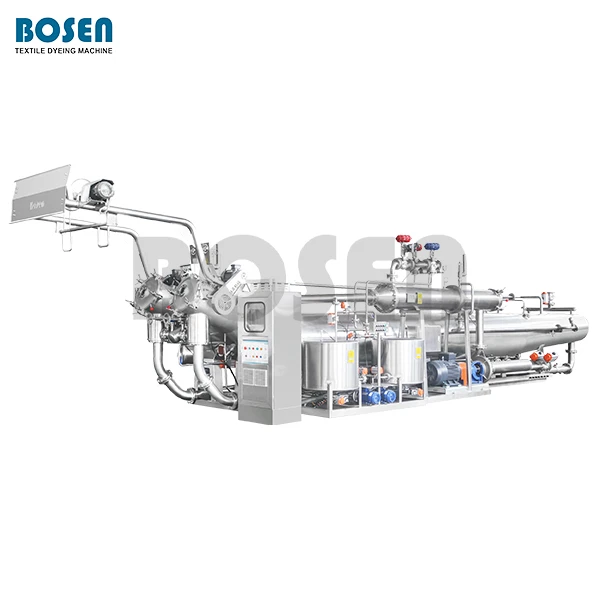
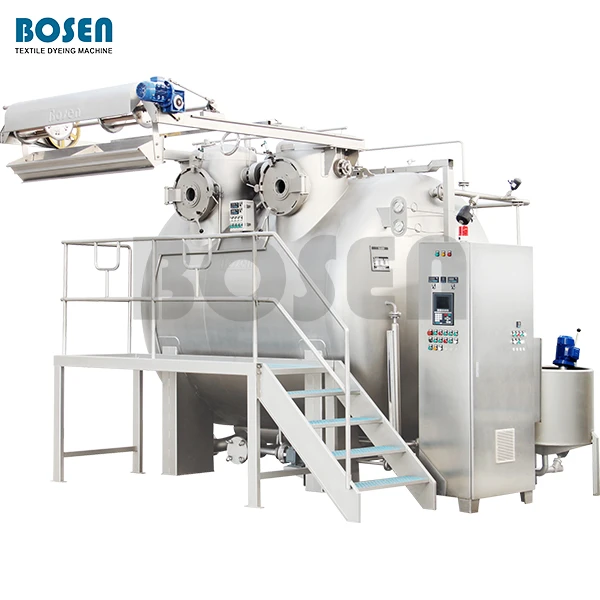
Once assembly is complete, every machine undergoes a full functional test under simulated operating conditions. This is where we push the system to its limits to make sure it performs consistently. We fill the dye vessel with water (to mimic dye solution) and run it through a full cycle at maximum temperature and pressure for several hours. During this test, we monitor every key parameter: pressure fluctuations, temperature accuracy, flow rate, and the performance of safety features like pressure relief valves and temperature cutoffs. For our Hthp Jet Dyeing Machine For Knitted Fabric, we also run it with actual fabric swatches to test for tangling, stretching, and dye uptake consistency. In these tests, we look for zero leaks (even minor seepage is a failure), temperature variations of no more than ±0.5°C across the entire vessel, and fabric that comes out without snags or discoloration from uneven flow. We've had customers tell us they've had machines from other suppliers that passed a quick pressure test but failed during a full cycle-this step is how we avoid that mistake, because simulating real production conditions is the only way to catch hidden flaws.
Safety is another non-negotiable QC standard for HTHP jet dyeing machines. These systems operate under pressure, which means a failure could cause serious injury or damage. We follow strict international safety standards, including ISO 10434 (textile machinery-safety requirements for dyeing and finishing machines) and CE certification for our European markets. Every machine has redundant safety features: a primary pressure relief valve that activates if pressure exceeds safe limits, a secondary backup valve, and a system that automatically shuts down the heater if temperature rises too high. During testing, we intentionally trigger pressure overages to make sure the valves open correctly, and we test the automatic shutoff systems to confirm they engage within milliseconds. For example, on our High Temperature High Pressure Jet Dyeing Machine For Woven Fabric, which is designed for heavier, sturdier materials, we test the pressure system up to 150% of its maximum rated pressure to make sure it doesn't rupture-this extreme test ensures the machine can handle unexpected surges during production.
After functional and safety testing, we do a final visual and documentation check. Every machine is inspected for cosmetic flaws: no dents in the vessel, smooth paint finishes, properly labeled control panels, and all pipes and fittings securely tightened. We also provide customers with a full set of documentation, including a QC test report with all cycle results, material certificates for every critical component, and a user manual with maintenance guidelines. This documentation isn't just paperwork-it's proof that the machine meets the standards we promised, and it helps customers with compliance for their own quality certifications.
Now, you might be wondering how these standards translate to real-world performance for your business. Let's talk about common pain points we see customers face with lower-quality machines. If a jet dyeing machine has poor temperature control, you could end up with batches that have inconsistent color-some pieces are too dark, some too light, which means you have to re-dye them, wasting fabric, chemicals, and time. If the flow system is poorly designed, knits can stretch or tangle, leading to downtime and damaged goods. Leaks in the pressure system not only waste water and dye, but they also create safety hazards and can damage the machine's surrounding infrastructure. By adhering to strict QC standards, our machines avoid these issues. For example, our High Temperature Airflow Jet Dyeing Machine uses a unique air-assisted flow system that reduces fabric tension by 30% compared to standard machines, which is perfect for stretch fabrics that can be easily damaged. During our testing, this system maintained consistent flow even with high-volume batches, so customers can run more fabric per cycle without sacrificing quality.
As a supplier, I also work closely with customers during installation to make sure the machine is set up correctly, because even a well-built machine can perform poorly if installed wrong. Our QC process doesn't end when the machine leaves our factory-we provide on-site support to calibrate the machine's control panels, train operators on safety protocols, and run a test batch with the customer's actual fabric to confirm performance. This follow-up is part of our commitment to quality, because we know that a machine is only as good as its ability to deliver results for your specific production needs.
If you're in the market for an HTHP jet dyeing machine, it's important to ask potential suppliers about their QC process. Don't just take their word for it-ask for test reports, ask about the standards they follow, and ask to see how their machines perform during real-world testing. At the end of the day, a machine is a significant investment, and you need to know that it's built to last, safe to operate, and capable of delivering consistent, high-quality results. Whether you're dyeing knits, wovens, or blends, our range of HTHP jet dyeing machines is built with the same strict QC standards I've outlined here, so you can trust that every batch will meet your expectations.
If you'd like to learn more about how our machines can fit your production needs, or if you have questions about our QC process, please reach out to our team to discuss your requirements and request a detailed product overview.


