

If you're in the textile dyeing game, you already know how much a properly running High Temperature (HT) Overflow Dyeing Machine can make or break your production. As a supplier who's worked with dozens of fabric mills over the past 8 years, I've seen everything from avoidable bottlenecks that add hours to runs to tiny tweaks that cut water, energy, and chemical use by 15-20% without ruining fabric quality. Today, I'm breaking down the real, actionable ways to optimize your HT overflow dyeing process-no fancy jargon, just stuff that actually moves the needle for your bottom line.
First, let's get clear on why HT overflow dyeing machines are non-negotiable for modern mills. If you're dyeing knitted or woven fabrics, these machines work by using a gentle, low-liquor ratio overflow system to keep fabric moving smoothly without stretching or damaging it, even at high temperatures (usually 120-140°C) that are key for vivid, long-lasting dyes. But here's the thing: a machine that runs perfectly for one mill might be a headache for another, just depending on how you set it up and maintain it. I'm not here to sell you a random machine, but if you're in the market for a model that makes optimization way easier, our Rapid Ht Overflow Dyeing Machine For Knitted Fabric is built with modular controls that let you tweak every parameter on the fly, no complicated reboots needed. We also have options for woven fabric, like our High Temperature Overflow Dyeing Machine For Woven Fabric, which has a sturdier roller system that cuts fabric snags mid-run.
Let's start with the biggest optimization hack I always preach: nail the liquor ratio. The liquor ratio is simply how much dye solution you use relative to the weight of fabric-think 1:5, 1:8, etc. Too high, and you're wasting water, energy, and dye; too low, and you get uneven dyeing, or fabric that knots or tangles. I've seen mills run ratios as high as 1:10 out of habit, which is crazy when the sweet spot for most knitted fabrics is 1:4 to 1:6, and even lower for synthetics. Our Low Liquor Ratio Overflow Dyeing Machine For Knitted Fabric is designed with a recirculation system that reuses up to 80% of the dye solution, so you don't have to refill the full tank for every batch. For woven fabrics, our Low Liquor Ratio Overflow Dyeing Machine works the same way, just with adjusted flow rates to handle heavier, stiffer fabrics. One mill in Pakistan I work with cut their water use by 22% in 3 months just by switching to our low-liquor model and adjusting their ratio settings-no fancy upgrades, just matching the machine's design to their workflow.
Next up, machine prepping before every run is make-or-break. This is the step most operators skip, and it's the reason why 30% of dye batches end up with uneven color, or fabric damage. Let's be real, no one wants to spend 20 minutes prepping a machine when a batch of 500kg cotton is waiting, but trust me, it saves way more time fixing mistakes later. First, flush the overflow channel and the main tank with hot water (60-70°C) before adding any dye or chemicals. Why? Dye residue from the last run can stick to the channel walls and transfer to new fabric, causing streaks. I had a customer in Turkey who was getting 12% reworks on his cotton jersey batches, and when we had him start flushing for 5 minutes pre-run, that number dropped to 2%. Second, check the roller tension and flow rate. If the overflow roller is too tight, it will stretch fine knit fabrics like rayon or spandex, ruining their hand feel; too loose, and fabric will pile up in the overflow channel, causing tangles mid-cycle. For our HT Overflow Dyeing Machine, we include a quick tension gauge that takes 10 seconds to set-no guesswork, no manual calculations. Third, calibrate the temperature sensor. A lot of old machines have sensors that are off by 5-7°C, which makes dye bind unevenly. Most operators just go by the machine's display, but once a month, test it with a separate digital thermometer to make sure it's accurate. That tiny fix alone can cut dye reworks by another 5-8%.
Now, process parameter tweaks that don't require new equipment, just adjusting how you run your batches. Let's talk about the heating and cooling cycle. Most operators crank the heat up as fast as possible to get to the target temperature, but that's a bad idea for fabric and dye. Fast heating can cause the outer layer of fabric to absorb dye too quickly, leaving the inside pale. Instead, heat at a rate of 1.5-2°C per minute, hold for 10-15 minutes once you hit 90°C, then finish heating to your final temperature. For cooling, do the same slow cool: drop at 2°C per minute, and add a neutralizing agent when you hit 60°C, not when it's cold. That keeps dye from settling unevenly, especially on polyester or blended fabrics. Another big one: dye addition timing. Don't dump all the dye in at the start. Split your dye into 3-4 portions, adding each one 20 minutes apart once the fabric is saturated. For reactive dyes (super common for cotton), this prevents over-absorption and leads to way more even color. One mill I work with in India was spending $1,200 a week on extra dye to fix uneven batches, and when they started splitting their dye additions, that cost dropped by $900 a week. It's simple, right? But you'd be shocked how many operators stick to the "dump and run" method because it's faster.
Maintenance isn't just for when the machine breaks-it's for optimizing every single run. Let's get specific here. First, clean the filter after every 2-3 batches. The overflow machine has a fine mesh filter that catches fabric lint and dye particles. If it's clogged, flow rate drops, which means fabric isn't moving evenly, leading to knots and uneven dye. I've seen mills go 10 batches without cleaning the filter, and their flow rate drops by 15-20%-that's a lot of downtime for snags. For our HT Overflow Dyeing Machine, we make the filter easy to remove and clean in 2 minutes, no tools needed. Second, inspect the overflow channel lining every quarter. Some machines have a Teflon or ceramic lining that prevents dye and fabric from sticking. If that lining gets scratched or worn, fabric will catch and tear. A quick visual check and a replacement $50 lining is way cheaper than repairing torn fabric that's worth $500 a batch. Third, lubricate the drive rollers monthly. Use a food-safe, high-temperature lubricant (regular grease breaks down at HT) to make sure rollers spin evenly. Worn or uneven rollers cause fabric to twist mid-run, which results in uneven color that you can't fix even with re-dyeing. I always tell my customers: if the roller makes a squeaking noise when it's running, that's a sign it needs lubrication, not just a random maintenance check.
Wait, let's talk about batch scheduling, which is a process optimization, not a machine tweak, but it makes a huge difference. A lot of mills run different fabric types back-to-back on the same machine, which is a mistake. If you just finished a batch of heavy woven denim, you can't run a delicate fine knit right after without deep cleaning the machine, which takes 1-2 hours and uses extra water. Instead, group similar batches together: all knits one day, all wovens the next, all synthetics the next. If you have to switch between fabric types, plan it for the end of the day when you have time for a deep clean, not when you're rushing to hit a deadline. One mill in Bangladesh I consulted for was switching between 7 different fabric types every day, leading to 10 hours of downtime a week. When they grouped batches, that downtime dropped to 2.5 hours a week-they now run 3 more batches a week with the same machine, which is $15,000 extra revenue a year just from scheduling.
Also, don't sleep on chemical management. Using too much surfactant (a chemical that helps dye penetrate fabric) can cause foaming in the overflow tank, which messes up flow rate and leads to uneven dye. The sweet spot is usually 0.5-1% of the fabric weight-test it on a small batch first. Also, make sure you use chemicals that are compatible with your machine's materials. For example, some low-quality acids can corrode metal overflow channels over time, leading to leaks or damaged fabric. Our HT Overflow Dyeing Machine is built with 316 stainless steel, which is resistant to most common dye chemicals, so you don't have to worry about that. If you're looking to upgrade to a more chemical-resistant machine, our Low Liquor Ratio Overflow Dyeing Machine is also built with this material, making it perfect for mills that use a lot of reactive or acid dyes.
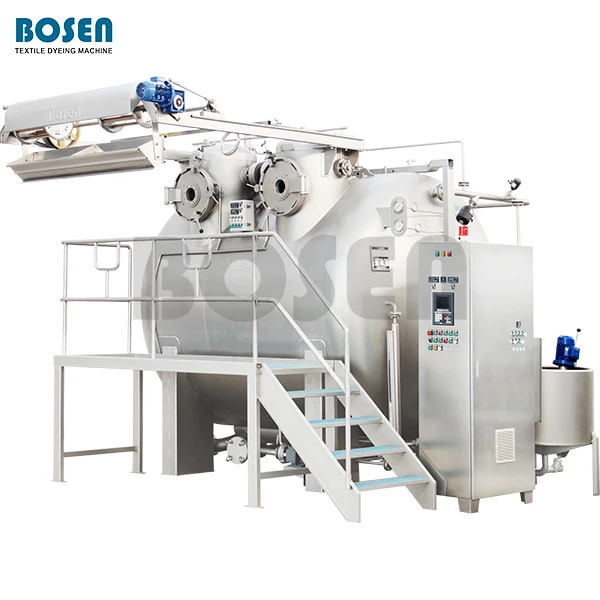

Before I wrap this up, let's address a common myth: you don't need to buy a brand new machine to optimize your process. A lot of small mills think they're stuck with old, inefficient equipment, and they can't afford a new one. But trust me, most of the optimization we talked about today works on any HT overflow machine, as long as you're intentional about prepping, scheduling, and maintenance. That said, if you're running into consistent issues-like low liquor ratios that are still too high, frequent fabric snags, or flow rate problems-it might be worth looking at a machine that's built to fix those pain points. Our Rapid Ht Overflow Dyeing Machine For Knitted Fabric is a great example: it has a patented overflow design that eliminates fabric tangles, so you don't waste time untangling batches. For woven fabric, our High Temperature Overflow Dyeing Machine For Woven Fabric has a reinforced roller system that handles heavier fabrics without stretching. And if you just want to cut your liquor ratio without a full machine upgrade, our Low Liquor Ratio Overflow Dyeing Machine can be fitted as a retrofittable system to your existing HT overflow machine-we've done that for over 50 mills with great results.
At the end of the day, optimizing your HT overflow dyeing process is all about small, consistent tweaks that add up to big savings. It's not about fancy technology or overhauls, it's about checking those pre-run steps, adjusting your parameters, staying on top of maintenance, and scheduling batches smart. If you're currently dealing with uneven dye, high water costs, or lots of reworks, start with one thing first-like lowering your liquor ratio or switching to splitting dye additions-you'll likely see a difference in the first month.
If you're ready to talk through your specific challenges, whether you're dealing with knitted, woven, or synthetic fabrics, and see what machine or tweaks make the most sense for your mill, reach out. We work with mills of all sizes, from small family operations to large multinational textile companies, and we don't push one-size-fits-all solutions-just stuff that works for your production.


