

Hey there! As a supplier of Ht Jet Dyeing Machines, I often get asked about the pressure requirements for operating these nifty pieces of equipment. And let me tell you, it's a topic that's super important if you wanna get the best results out of your dyeing process.
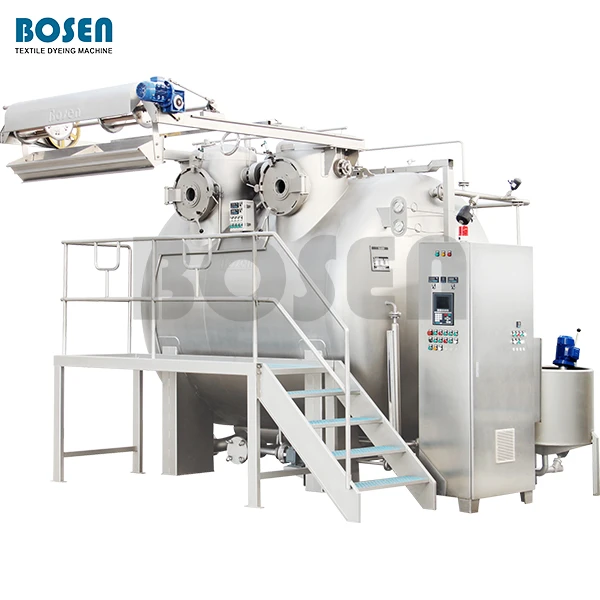
So, what exactly is an Ht Jet Dyeing Machine? Well, these machines are designed to dye fabrics using a high - temperature and high - pressure jet system. They're great for all sorts of fabrics, whether they're woven or knitted, and they can help you achieve consistent and high - quality dyeing results.
First off, let's talk about why pressure matters in an Ht Jet Dyeing Machine. Pressure plays a crucial role in the dyeing process because it helps the dye penetrate the fabric evenly. When the pressure is right, the dye can reach every fiber of the fabric, resulting in a more vibrant and uniform color.
The ideal pressure for operating an Ht Jet Dyeing Machine can vary depending on a few factors. One of the main factors is the type of fabric you're dyeing. For example, woven fabrics are generally more tightly woven than knitted fabrics. That means they might require a higher pressure to ensure the dye can penetrate all the way through.
If you're working with woven fabric, a High Temperature Airflow Jet Dyeing Machine For Woven Fabric can be a great choice. These machines are specifically designed to handle the unique characteristics of woven fabrics. Generally, for a standard - weight woven fabric, you might need an operating pressure in the range of 2 - 3 bar. But if you're dealing with a very heavy - duty or tightly - woven fabric, you could need up to 4 bar.
On the other hand, knitted fabrics are more flexible and porous. That's why a Rapid Ht Jet Dyeing Machine For Knitted Fabric is often the go - to option. Since knitted fabrics allow the dye to penetrate more easily, the pressure requirements are usually a bit lower. You can typically operate these machines at around 1.5 - 2 bar.
Another factor that affects the pressure requirement is the type of dye you're using. Some dyes are more viscous than others. If you're using a thick or sticky dye, you'll need more pressure to make it flow through the machine and into the fabric. Meanwhile, thinner dyes can work well at lower pressures.
The liquor ratio also comes into play. A Low Liquor Ratio Jet Dyeing Machine is great for saving water and dye, but it can have an impact on the pressure requirements. With a low liquor ratio, there's less liquid to act as a lubricant and carrier for the dye. As a result, you might need to increase the pressure slightly to ensure proper circulation of the dye solution.
Then, there's the issue of the machine's design and capacity. Different Ht Jet Dyeing Machines have different internal structures and pumping systems. A larger machine with a high - capacity pump might be able to handle higher pressures more easily compared to a smaller model.
Now, let's look at the consequences of having the wrong pressure. If the pressure is too low, the dye won't penetrate the fabric effectively. You might end up with uneven color, or the dye might not bond properly to the fibers. This can lead to color fading over time and a lower - quality finished product.
Conversely, if the pressure is too high, it can cause damage to the fabric. The high pressure can force the dye too aggressively, which might lead to fabric distortion, pilling, or even tearing. It can also put a lot of stress on the machine itself, potentially leading to premature wear and tear.
Maintaining the right pressure is also important for machine efficiency. When the pressure is optimized, the machine runs smoothly, and you can get more dyeing done in a shorter amount of time. This can translate to cost savings in the long run, as you'll save on energy and labor.
For example, a High Temperature High Pressure Jet Dyeing Machine For Woven Fabric is equipped to handle the rigors of high - pressure dyeing. But even with these robust machines, it's crucial to monitor and adjust the pressure as needed.
Some of the new - generation High Temperature Airflow Dyeing Machine models come with advanced pressure control systems. These systems can automatically adjust the pressure based on the fabric type, dye properties, and other factors. This not only makes the dyeing process more consistent but also reduces the need for constant manual monitoring.
In addition to all these technical aspects, it's also essential to have your operators properly trained. They need to understand how to read the pressure gauges and make the necessary adjustments. Regular maintenance of the machine is also key. This includes checking the pumps, valves, and other pressure - related components to ensure they're in good working condition.
Overall, find the right balance of pressure for your Ht Jet Dyeing Machine is a bit of an art, but with the right knowledge and equipment, you can master it. And that's where we come in! As a supplier of Ht Jet Dyeing Machines, we're here to help you find the perfect machine for your needs and provide all the support you need to operate it effectively.

If you're interested in learning more about our Ht Jet Dyeing Machines or have questions about pressure requirements, feel free to reach out. We're more than happy to have a chat and help you make the best decisions for your dyeing operations. Whether you're a small - scale fabric dyer or a large - industrial manufacturer, we've got the solutions for you. So don't hesitate, get in touch for further discussions and let's take your dyeing process to the next level!


