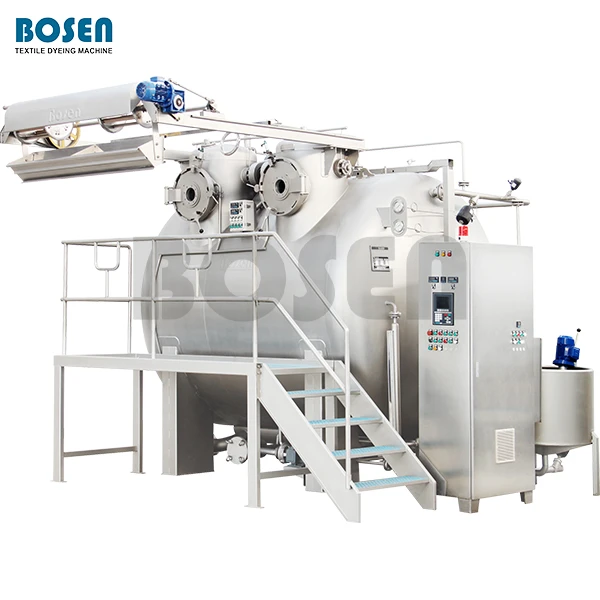
📊 Verification of Key Fundamental Indicators
1. Liquor Ratio: This is the core parameter for energy efficiency in overflow dyeing machines. Advanced low-liquor-ratio models can achieve ratios as low as 1:3.5 to 1:5. Compared to traditional models (1:8 to 1:13), this directly reduces the consumption of water, steam, and chemical auxiliaries by over 50%, resulting in significant water savings and pollution reduction.
2. Heat Recovery System Efficiency: High-quality overflow dyeing machines feature waste heat recovery systems with efficiencies of up to 85%. They efficiently capture heat from high-temperature spent dye liquor to preheat the incoming water for the next batch, drastically lowering steam consumption during the heating phase.
3. Machine Body Insulation Performance: Utilizing a composite insulation structure-combining rock wool with rubber-plastic foam-the surface temperature of the machine casing remains close to the workshop's ambient temperature during operation. This minimizes ineffective heat dissipation and prevents energy waste caused by heat escaping directly into the workshop air.
⚡ Benchmarking Actual Operational Energy Consumption
1. Water Consumption per Unit of Fabric: By tracking the total water used to process one tonne of fabric, it is evident that low-liquor-ratio energy-saving models can keep consumption under 30 tonnes, whereas traditional high-liquor-ratio models typically exceed 50 tonnes. This difference directly reflects the level of water and energy conservation.
2. Electricity Consumption per Unit of Fabric: Comparing the total electricity consumed by the main circulation pump and drive system per tonne of processed fabric reveals that models utilizing flow-field optimization and low-resistance flow paths operate with lower main pump loads, reducing electricity consumption by 20% to 30%.
3. Steam Consumption per Unit of Fabric: Measuring total steam consumption during the ramp-up from ambient temperature to the dyeing process temperature shows that models equipped with efficient waste heat recovery systems can reduce steam consumption per tonne of fabric by over 30% compared to standard models; this serves as the most direct quantitative indicator of energy-saving performance.
Verification of Smart Features and Structural Energy Efficiency
1. Intelligent Energy Management: Models equipped with digital twin-based smart management systems enable real-time energy monitoring, energy-saving management, and digital cluster control throughout the dyeing process; they automatically optimize heating curves and circulation pump power to eliminate wasteful energy consumption.
2. Optimized Flow Field Structure: Models featuring flow field optimization (via nozzle and fabric guide tube simulations) benefit from reduced dye liquor flow resistance; stable overflow is achieved without requiring high-power pump operation, thereby minimizing power loss while maintaining dyeing quality.
3. Precision Temperature Control: Models utilizing gradient temperature control systems achieve temperature accuracy of ±0.5°C during dyeing; this prevents excessive steam consumption caused by overheating or uneven temperatures and reduces energy waste associated with repeated reheating.
✅ Final Comprehensive Assessment Criteria
An overflow dyeing machine is deemed to possess industry-leading energy efficiency-delivering excellent comprehensive benefits in water conservation, energy saving, pollution reduction, and carbon footprint reduction-if it simultaneously meets the following criteria: low liquor ratio, waste heat recovery rate ≥80%, and per-ton fabric consumption (water, electricity, and steam) at least 30% lower than the industry average.