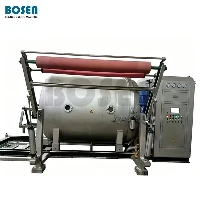
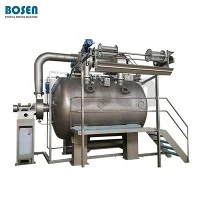
As a supplier of Ht Airflow Dyeing Machines, I'm often asked about the requirements for the dyeing auxiliaries used in these sophisticated machines. In this blog post, I'll delve into the key requirements and why they are crucial for achieving optimal results in dyeing processes using Ht Airflow Dyeing Machines.

Solubility and Compatibility
One of the most fundamental requirements for dyeing auxiliaries in Ht Airflow Dyeing Machines is high solubility. The auxiliaries need to dissolve quickly and completely in the dye bath to ensure uniform distribution of the dyes and additives throughout the fabric. Poor solubility can lead to uneven dyeing, resulting in color discrepancies and quality issues.
Compatibility is another critical factor. The dyeing auxiliaries must be compatible with the dyes, fibers, and other chemicals used in the dyeing process. Incompatible auxiliaries can cause precipitation, aggregation, or chemical reactions that may damage the fabric, affect the dyeing performance, or reduce the efficiency of the dyeing machine. For example, some auxiliaries may react with certain dyes under specific conditions, leading to the formation of insoluble complexes that can clog the machine's nozzles or pipes.
Heat Resistance
Ht Airflow Dyeing Machines often operate at high temperatures, typically ranging from 120°C to 140°C or even higher in some cases. Therefore, the dyeing auxiliaries used in these machines must have excellent heat resistance. They should be able to maintain their chemical stability and functionality at elevated temperatures without decomposing, volatilizing, or losing their effectiveness.
Heat-resistant auxiliaries ensure that the dyeing process can be carried out smoothly and consistently at high temperatures, which is essential for achieving deep and fast dyeing results, especially for synthetic fibers such as polyester. Any degradation of the auxiliaries due to heat can lead to variations in color, reduced dye uptake, and potential damage to the fabric.
Foam Control
Foam can be a significant problem in dyeing processes, especially in Ht Airflow Dyeing Machines. Excessive foam can interfere with the normal operation of the machine, cause uneven dyeing, and increase the consumption of dyes and auxiliaries. Therefore, the dyeing auxiliaries should have good foam control properties.
Antifoaming agents are commonly used as dyeing auxiliaries to prevent or reduce foam formation. These agents work by reducing the surface tension of the dye bath, which inhibits the formation of stable foam bubbles. They should be effective at low concentrations and should not affect the dyeing performance or the quality of the fabric.
Low Liquor Ratio Adaptability
Ht Airflow Dyeing Machines are known for their ability to operate at low liquor ratios, which can significantly reduce water and energy consumption. The dyeing auxiliaries used in these machines must be adaptable to low liquor ratio conditions. They should be able to function effectively in a relatively small volume of liquid, ensuring efficient dye diffusion and penetration into the fabric.
Auxiliaries that are specifically designed for low liquor ratio dyeing processes can improve the dyeing quality and reduce the environmental impact. They can help to enhance the solubility of dyes, improve the wetting and penetration of the fabric, and ensure uniform dyeing even at low liquor ratios.
Environmental Friendliness
In today's environmentally conscious world, the demand for eco-friendly dyeing auxiliaries is increasing. As a supplier of Ht Airflow Dyeing Machines, we encourage the use of auxiliaries that are biodegradable, non-toxic, and free from harmful substances such as heavy metals, formaldehyde, and APEO (alkylphenol ethoxylates).
Eco-friendly dyeing auxiliaries not only meet the environmental regulations but also contribute to the sustainable development of the textile industry. They can reduce the pollution load in wastewater, minimize the health risks to workers, and enhance the marketability of the dyed products. For example, Eco Friendly Overflow Dyeing Machine is designed to work in harmony with these eco-friendly auxiliaries to achieve a more sustainable dyeing process.
High Efficiency and Cost-Effectiveness
Efficiency is a key consideration in the dyeing industry. The dyeing auxiliaries should be able to improve the dyeing efficiency, reduce the dyeing time, and increase the productivity of the Ht Airflow Dyeing Machines. They can achieve this by enhancing the dye uptake, accelerating the dye diffusion, and improving the fixation rate of the dyes.
At the same time, cost-effectiveness is also important. The auxiliaries should provide good performance at a reasonable cost. This requires careful selection of the auxiliaries based on their effectiveness, quality, and price. By using high-efficiency and cost-effective auxiliaries, textile manufacturers can reduce their production costs and improve their competitiveness in the market.
Compatibility with Different Fabrics
Ht Airflow Dyeing Machines are used to dye a wide variety of fabrics, including natural fibers (such as cotton, wool, and silk), synthetic fibers (such as polyester, nylon, and acrylic), and blends of different fibers. The dyeing auxiliaries should be compatible with different types of fabrics and should not cause any damage or adverse effects to the fabric structure, hand feel, or appearance.
For example, auxiliaries used for dyeing natural fibers may need to have different properties compared to those used for synthetic fibers. Natural fibers are often more sensitive to chemicals and require gentle treatment to maintain their softness and durability. On the other hand, synthetic fibers may require auxiliaries that can enhance the dye affinity and improve the color fastness.
Compatibility with Machine Design
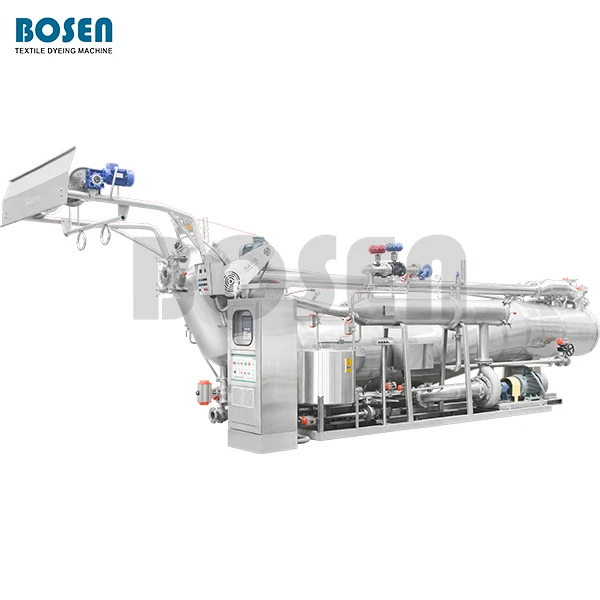
The dyeing auxiliaries should also be compatible with the design and operation of the Ht Airflow Dyeing Machine. They should not cause any blockage or damage to the machine's components, such as the nozzles, pipes, and pumps. The auxiliaries should flow smoothly through the machine's system and not leave any residues or deposits that can affect the performance of the machine.
In addition, the auxiliaries should be able to work in conjunction with the machine's airflow and liquid - flow characteristics. The airflow in the Ht Airflow Dyeing Machine is used to transport the fabric and facilitate the dyeing process. The auxiliaries should be able to interact effectively with the airflow and liquid flow to ensure uniform dyeing and efficient use of the dyes.
Conclusion
In summary, the requirements for dyeing auxiliaries used in Ht Airflow Dyeing Machines are complex and multifaceted. Solubility, compatibility, heat resistance, foam control, low liquor ratio adaptability, environmental friendliness, high efficiency, cost - effectiveness, compatibility with different fabrics, and compatibility with machine design are all important factors that need to be considered.
As a supplier of Ht Airflow Dyeing Machines, we understand the importance of these requirements and are committed to providing our customers with the best solutions. We also offer a range of related products such as Ht Air Liquid Flow Dyeing Machine, Low Liquor Ratio Overflow Dyeing Machine For Knitted Fabric, and High Temperature Overflow Dyeing Machine For Woven Fabric to meet different production needs.
If you are interested in our products or have any questions about the dyeing auxiliaries for Ht Airflow Dyeing Machines, please feel free to contact us for procurement and negotiation. We look forward to working with you to achieve excellent dyeing results and sustainable development in the textile industry.