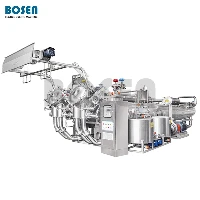
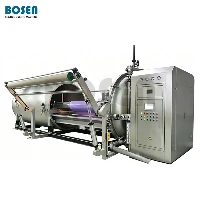
The three-layer chamber dyeing machine features a structure divided into an upper layer, a slide layer, and a bottom layer. During the circulation process, the fabric is distributed across these three storage zones, ensuring smoother movement. Compared to the stacking method used in single-column, deep-chamber machines, this configuration effectively reduces the compression exerted on the fabric, thereby lowering the risk of crease formation. This design combines the low liquor ratio advantage of circular dyeing machines with the broad fabric versatility characteristic of L-type dyeing machines.

Lower Pipe Options
The lower pipe is chosen for the finish effect wanted, not for the fabric alone. Six forms are available and each produces a different action on the cloth as it leaves the chamber.
|
Lower pipe |
Effect |
Fabric weight group |
|
100A, 45° round |
Spreading device |
Thin fabrics |
|
125A, 45° no collision plate |
Strong kneading effect |
Thin fabrics |
|
125A, 45° single collision |
Crease response |
Thin fabrics |
|
100A round bend |
Square device, anti-swirl pipe |
Heavy fabrics |
|
125A square bend |
Light kneading effect |
Heavy fabrics |
|
150A square bend |
Addresses displacement, abrasion and compression |
Heavy fabrics |
Matching Pipe To Fabric Weight
Thin fabric programmes and heavy fabric programmes do not share a pipe. The distinction is not cosmetic: a strong kneading action that improves hand on a thin fabric will mark a heavy one, and an anti-swirl pipe chosen to stop displacement on a heavy fabric will do little for a light one.
|
Fabric group |
Pipe to start with |
What changes |
|
Thin fabric, smooth hand wanted |
100A, 45° round |
Spreading action, least mechanical work |
|
Thin fabric, surface texture wanted |
125A, 45° no collision plate |
Stronger kneading |
|
Thin fabric, crease marks to avoid |
125A, 45° single collision |
Crease response |
|
Heavy fabric, swirl to control |
100A round bend |
Anti-swirl square device |
|
Heavy fabric, light hand |
125A square bend |
Light kneading |
|
Heavy fabric, abrasion to avoid |
150A square bend |
Addresses displacement, abrasion and compression |
Pairing Nozzle And Pipe
Nozzle and pipe are selected independently, which is what makes the platform flexible. The nozzle sets how the cloth is delivered into the chamber; the pipe sets what happens to it on the way out. Both are listed separately in the BOSEN product literature, and the pairing below is a starting point for trials rather than a fixed specification.
|
Nozzle family |
Flow character |
Best paired when |
|
Span nozzle (S) |
Balanced angle and flow |
One nozzle has to cover a general fabric mix |
|
SF nozzle |
Span and filament strengths combined |
The programme spans two fabric families |
|
Parallel nozzle (P) |
Parallel angle, cloth moved by flow |
Gentle processing is the priority |
Fabric Length Variation
The dual-bath, single-tank design minimises the occurrence of fabric length variation, shortens the time cloth spends in the dye tank and raises the number of dyeing cycles in a shift. On stretch-sensitive fabrics the length figure is often the first thing a customer measures after a trial, so it is worth recording the greige length against the finished length for every new programme rather than only for the first one.
Where To Find The Full Model Table
Pipe effects and nozzle sizes are as published in the GYX-PFA product literature. The complete model table, including liquor volume and utility figures, is on the soft flow page and the extra large capacity page respectively.


Hot Tags: three layer chamber dyeing machine, China three layer chamber dyeing machine manufacturers, suppliers, Eco Friendly Jet Dyeing Machine, High Temperature Airflow Dyeing Machine, High Temperature High Pressure Jet Dyeing Machine, Ht Jet Dyeing Machine, Hthp Jet Dyeing Machine, jet dyeing machine